ANTONIO RAIMO GALLERY
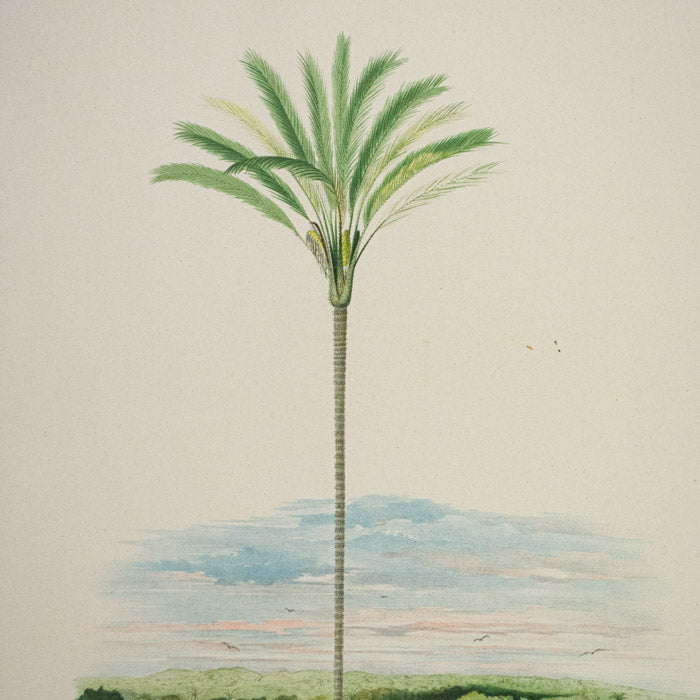
Rodriquez, Botantical: Palm Trees, Diplothemium
Rodriquez, Botantical: Palm Trees, Diplothemium
Couldn't load pickup availability
The genus **Diplothemium** refers to a group of palm trees within the family **Arecaceae**. Here’s a closer look at this genus:
### **Diplothemium Genus**
- **Family**: Arecaceae (Palm family)
- **Genus**: Diplothemium
- **Distribution**: This genus is primarily found in tropical regions, particularly in areas with high humidity and consistent rainfall.
### **Characteristics**
- **Appearance**: Diplothemium palms generally have slender, solitary trunks. The trunk is usually covered with leaf scars or may have a somewhat rough surface.
- **Leaves**: The leaves are pinnate (feather-like) and are typically arranged in a crown at the top of the trunk. They can vary in size and shape among different species within the genus.
- **Flowers and Fruit**: Like other palms, Diplothemium species produce flowers and fruit, though specifics can vary depending on the species.
### **Species**
Several species fall under the genus Diplothemium, each with unique characteristics:
1. **Diplothemium hildebrandtii**: Found in East Africa, this species is known for its distinctive appearance and habitat preferences.
2. **Diplothemium maritimum**: Known for its coastal habitat, as suggested by its name "maritimum."
### **Ecological and Practical Uses**
- **Ecological Role**: These palms play a role in their ecosystems by providing habitat for wildlife and contributing to the biodiversity of tropical forests.
- **Uses**: They may be used ornamentally in landscaping and have traditional uses in some regions where they are native.
If you have specific questions about a particular species within the Diplothemium genus or need details on their care or ecological impact, let me know!